"When does Vrindavan feel closest to Krishna? The answer is not just a season — it is a feeling that descends the moment you step onto this sacred soil and hear the name Radhe Radhe echo through its ancient lanes."
Vrindavan is not merely a destination on a map. It is a living, breathing space where time slows down, the fragrance of incense fills every corner, and temple bells seem to call you by name. Whether you are a first-time pilgrim or a seasoned devotee returning for the hundredth time, the best time to visit Vrindavan is the question that can make or break your entire yatra.
This guide will not just tell you the weather. It will help you feel Vrindavan — through its festivals, its moods, its seasons — so you can choose the moment that resonates deepest with your soul. And when you are ready to go, we have the services to make your journey seamless.
🌸 Why Vrindavan Is Unlike Any Place on Earth
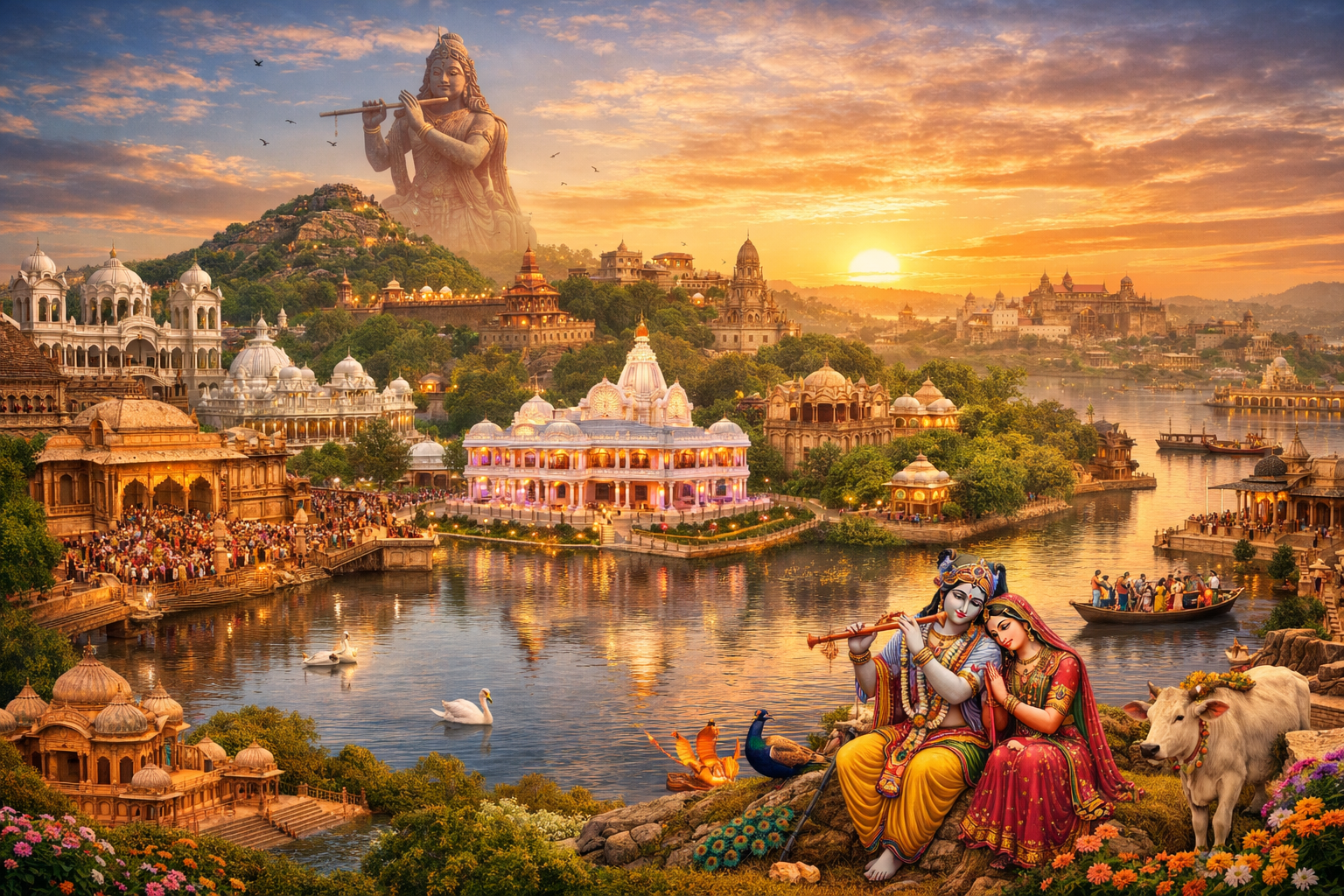
There are thousands of holy places in India. But Vrindavan holds a special status — it is the land of Krishna's Bal Leelas, the playground of the divine. Every stone, every tree, every ghat on the Yamuna carries a memory of Radha and Krishna's eternal love. The ancient scriptures describe Vrindavan as a place that never loses its spiritual energy — no matter the season, no matter the hour.
But timing does matter. The weather in Vrindavan, the ongoing festivals, the energy of the month — all of these shape what your experience will feel like. Go during Holi and you will be drenched in colour and divine ecstasy. Go during Kartik and every lamp you see will feel like it was lit for you. Go in October and the cool winter air will wrap around you like a devotee's shawl.
Vrindavan is home to over 5,000 temples, from the ancient Govind Dev Ji Mandir to the luminous Prem Mandir. Before planning your visit, it helps to know the Vrindavan temple timings for 2026 so you do not miss even a single darshan.
⭐ Quick Summary: Best Time to Visit Vrindavan
- Overall Best Season: October to March (cool, pleasant weather)
- Best Festival Time: Holi (Feb–Mar), Janmashtami (Aug–Sep), Kartik Month (Oct–Nov)
- Avoid: May, June, July (extreme heat and heavy monsoon)
- Spiritual Peak: Kartik Maas (considered the holiest month in Vrindavan)
- Crowd-Free Visit: November to January (post-Kartik, pre-Holi)
🗓️ Vrindavan Season Guide: Month by Month
❄️ October to February — The Golden Season
This is, without doubt, the best time to visit Vrindavan for most pilgrims and tourists. The scorching summer heat is gone, the monsoon rains have washed the land clean, and a cool, gentle breeze drifts in from the north. Temperatures hover between 8°C and 25°C — comfortable enough for long temple walks, Vrindavan Parikrama, and hours of peaceful darshan.
The month of Kartik (October–November) transforms Vrindavan into something almost otherworldly — we will talk about that in detail in the festivals section below. After Kartik, from November to January, Vrindavan becomes quieter, more meditative. The lanes are less crowded, the air is crisp, and the temples feel deeply intimate. This is the time serious sadhakas prefer.
🌺 February to March — The Season of Radha's Colour
If October is Vrindavan at its most peaceful, then March is Vrindavan at its most alive. This is the season of Holi — and in Vrindavan, Holi is not just a festival. It is a week-long divine celebration unlike anything on earth. More on this below.
Temperatures in February sit at a comfortable 12°C to 28°C. By March, as Holi approaches, the air warms but remains festive. The entire Braj region — Vrindavan, Mathura, Barsana, Nandgaon — erupts in colour, song, and devotion. This is peak tourist season, so plan and book early.
- 🌡️ Temperature: 12°C to 30°C
- 👍 Perfect for: Holi celebrations, Lathmar Holi, Banke Bihari darshan
- ⚠️ Note: Accommodation and taxis get booked weeks in advance
☀️ April to June — Fierce Heat, Fewer Crowds
April still holds some charm — the flowers of spring linger and the heat is manageable. But by May and June, Vrindavan transforms into a furnace. Temperatures regularly cross 45°C. The narrow lanes become unbearable by mid-morning. Most pilgrims avoid this season entirely.
If you must visit during summer, plan to reach temples by 6 AM and return to your hotel by 10 AM. Evenings after 6 PM become bearable again. Carry plenty of water, wear cotton, and never underestimate the sun.
- 🌡️ Temperature: 28°C to 46°C
- ✅ Advantage: Very few tourists, easy temple access, budget accommodation
- ❌ Disadvantage: Extreme heat, some temple sections close during peak heat
🌧️ July to September — Monsoon Magic & Janmashtami
July brings relief from the heat as monsoon rains descend on Vrindavan. The Yamuna swells. The trees turn emerald green. Ancient temples glisten in the rain. For a devotee who sees Vrindavan through spiritual eyes, the monsoon is strangely beautiful — Vrindavan in the rains feels like you have stepped into a painting from the Bhagavata Purana.
But the real reason to visit in this season is Janmashtami in August — one of the most electrifying events in all of India. We cover this in detail below.
- 🌡️ Temperature: 25°C to 38°C
- 🎉 Key event: Janmashtami (August) — a once-in-a-lifetime experience
- ⚠️ Note: Roads can flood during heavy rain; carry rain gear
🎊 Festivals That Make Vrindavan Feel Alive
If weather determines when you can go, festivals determine when you must go. Vrindavan's festivals are not performances for tourists — they are living expressions of devotion that have been celebrated for thousands of years. Each one has the power to change you.
🎨 Holi in Vrindavan — The Festival the World Comes For
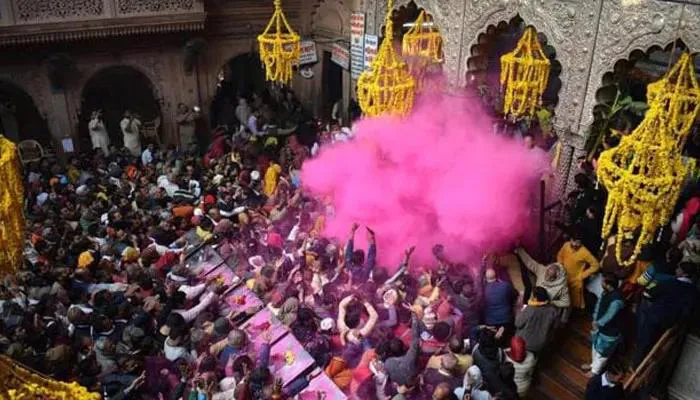
Close your eyes and imagine this: The morning mist is still clinging to Vrindavan's lanes when the first burst of colour explodes above Banke Bihari Temple. Thousands of devotees — dressed in white, already laughing — are pelted with gulal from every direction. The air turns pink, then red, then a wild rainbow of purple and saffron. The priests inside the temple are throwing colour on the crowd. A man next to you — a stranger — rubs blue powder into your cheeks and shouts, "Radhe Radhe!" You laugh. You cry. You cannot tell the difference.
This is Holi in Vrindavan. And no description does it justice.
Vrindavan's Holi celebrations begin a full week before the main Holi day. Each location in the Braj region offers a different experience:
- Lathmar Holi (Barsana & Nandgaon) — Women chase men with sticks (lathis) while men shield themselves with shields. It sounds chaotic. It is joyful beyond words.
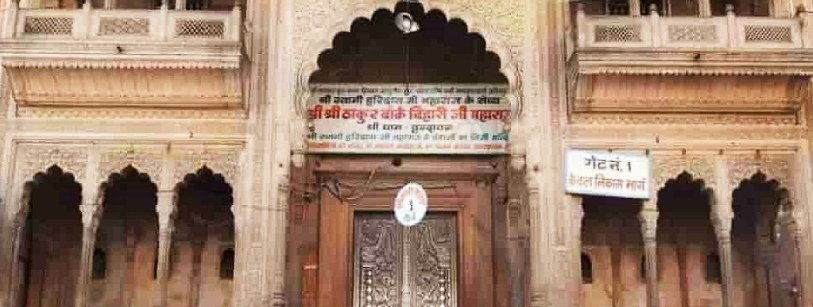
- Phoolon Ki Holi (Vrindavan) — At Banke Bihari Temple, Holi is played with flowers rather than colours. One of the most breathtaking sights in all of Braj.
- Rangbhari Ekadashi — The day Lord Shiva is said to celebrate Holi in Kashi. Vrindavan responds with its own celebrations.
- Main Holi Day — The streets of Vrindavan become a river of colour. Every temple, every gali, every ghat joins in. It lasts all day.
💡 Pro Tip: Book your accommodation and taxi at least 3–4 weeks in advance. Vrindavan during Holi is one of the most visited events in India — everything sells out fast.
🥁 Janmashtami — The Night Krishna Was Born
It is midnight. You are standing in a crowd of tens of thousands at the Krishna Janmabhoomi in Mathura. The chanting grows louder by the minute. Priests move in an elaborate ritual that has not changed in centuries. And then — at the stroke of midnight — the conch shells blow, the bells ring in a roar, and the entire crowd erupts. Jai Shri Krishna! People weep. People dance. The divine moment has arrived: Krishna has been born again.
Janmashtami in the Mathura-Vrindavan region is in a category of its own. Millions visit during this period. The entire Braj Dham becomes one enormous celebration that lasts 48 hours without pause.
- 🎊 Temples are decorated magnificently — Prem Mandir at night looks like a divine palace
- 🎭 Raas Leela performances happen across Vrindavan
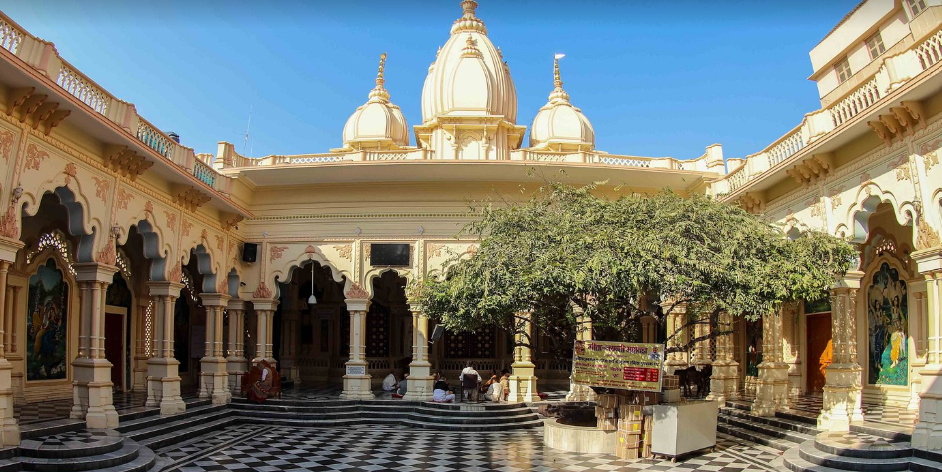
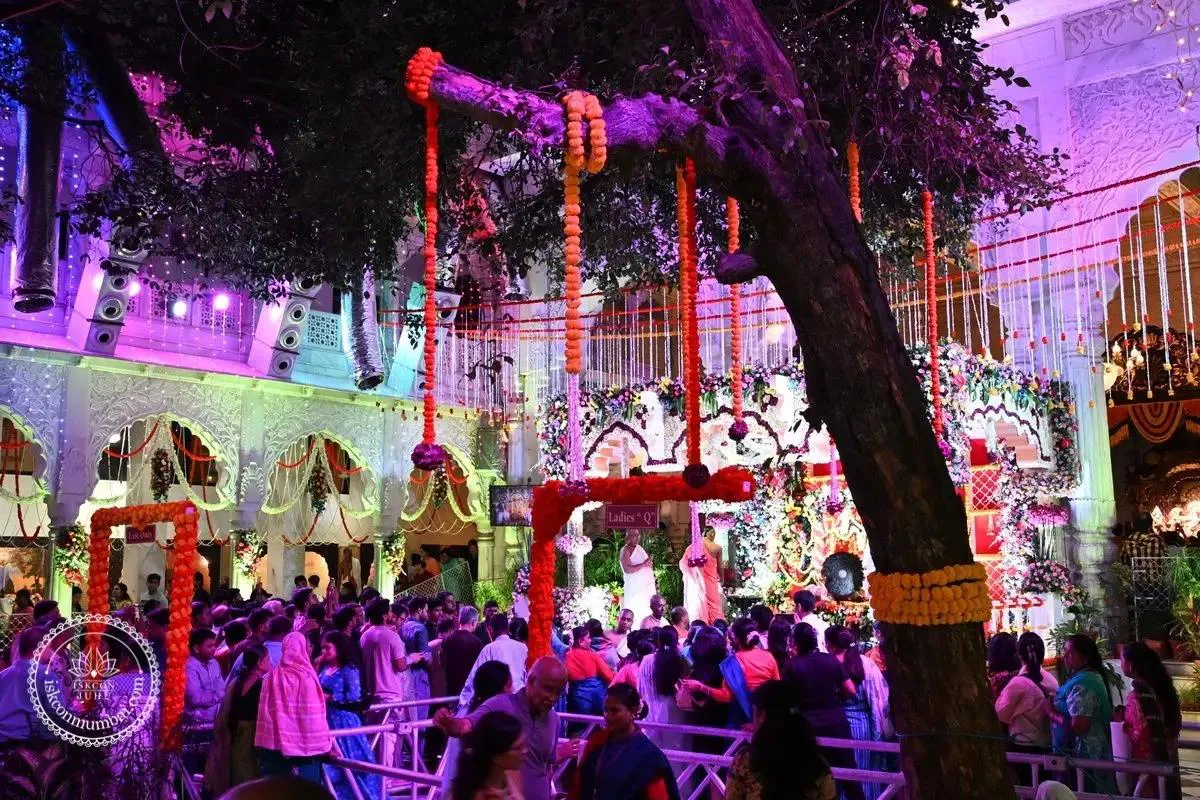
- 🌙 The midnight Abhishek at ISKCON Vrindavan draws thousands
- 🍯 Special Janmashtami prasad — makhan mishri and panjiri — is distributed in abundance
Don't miss the Nandotsav the following day, celebrated in Nandgaon — the village of Krishna's foster father Nanda Baba — with great joy and colour.
🪔 Kartik Maas — The Most Sacred Month in Vrindavan
Ask any seasoned Vrindavan devotee: "When should I go?" Nine out of ten will answer without hesitation — Kartik.
The month of Kartik (October–November) is considered the holiest month in the entire Vaishnava calendar. According to the scriptures, any act of devotion performed in Vrindavan during Kartik yields a thousand times more spiritual merit. Lighting a single diya at a temple. Completing one round of parikrama. Chanting one mala of the Hare Krishna mahamantra. All of it multiplied.
The atmosphere in Vrindavan during Kartik is unlike any other time. Every evening, thousands of devotees walk the Vrindavan Parikrama route, holding lamps, chanting, weeping with devotion. The Yamuna ghats are covered with floating diyas. Every temple holds special programs. The air itself seems saturated with Krishna's presence.
- 🪔 Damodar month — lamps are offered to Lord Damodara every evening
- 🌿 Tulsi Vivah — the divine wedding of Tulsi Devi and Lord Vishnu
- ⛰️ Govardhan Puja — the day Krishna lifted Govardhan Hill is celebrated with immense devotion
- 🚶 Kartik Parikrama — thousands perform Vrindavan Parikrama barefoot every single day
- 🎵 Special bhajans and Raas Leela performances happen nightly across the town
Many devotees from across India and the world spend the entire Kartik month in Vrindavan. If you can only visit Vrindavan once in your life, come during Kartik.
Other Important Festivals to Know
| Festival | Month | What Makes It Special |
|---|---|---|
| Radhashtami | Aug–Sep | Birthday of Radha Rani — temples overflow with devotion |
| Basant Panchami | January–February | Holi begins — spring arrives in Braj, yellow flowers everywhere |
| Dev Uthani Ekadashi | November | Vishnu awakens from yoga nidra — lamps light up every ghat |
| Govardhan Puja | October–November | Day after Diwali — circumambulation of Govardhan Hill |
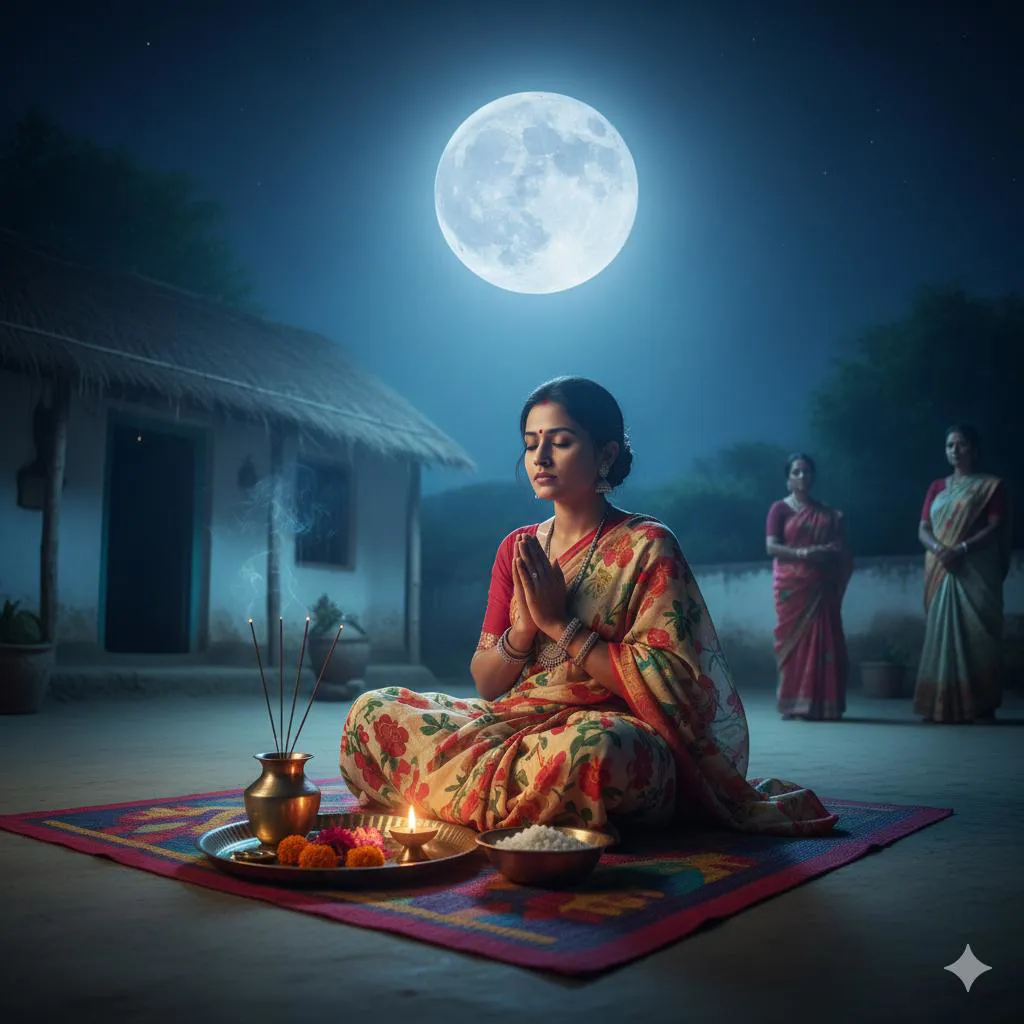
| Sharad Purnima | October | The night of Krishna's Maharaas — full moon over Yamuna |
🚕 Planning to Visit Vrindavan?
Let Krishna guide your journey — and let us handle the ride. Book a comfortable, trusted taxi for your Vrindavan temple darshan and parikrama.
📱 Book Taxi on WhatsApp — +91 87009 12247Available 24×7 | All Braj Dham routes covered | AC vehicles available
🧳 Practical Travel Tips for Vrindavan Devotees
Knowing the best time to visit Vrindavan is one thing — arriving fully prepared is another. These tips from experienced pilgrims will help you have a smooth, spiritually fulfilling yatra.
✅ What to Carry for Your Vrindavan Yatra
- Comfortable walking shoes or chappals (temples require removing footwear)
- Cotton or light linen clothes — modest, full-length preferred at temples
- Dupatta or shawl (for covering head during temple entry)
- Reusable water bottle — Vrindavan's summer heat is no joke
- Small cloth bag for carrying prasad
- A japa mala for chanting during parikrama
- Cash in small denominations — many temple stalls don't accept cards
- Sunscreen and cap if visiting in summer or spring
🕍 Temple Darshan Tips
Most major temples in Vrindavan follow a two-session darshan schedule. They open early morning (around 6–8 AM), then close in the afternoon (typically 12 PM – 4 PM), and reopen in the evening until 8–9 PM. Planning your visits around these timings is essential. Read the complete Vrindavan temple darshan timings guide before you go.
- Arrive at Banke Bihari Temple early morning — crowds are smaller and the darshan is more intimate
- Prem Mandir's evening light show (after 7:30 PM) is not to be missed — arrive 30 minutes early
- ISKCON Vrindavan's Mangala Aarti at 4:30 AM is one of the most spiritually moving experiences in Braj
- Nidhivan closes before sunset — plan your visit to end by 5 PM
- Carry a printed temple list — it helps when exploring lesser-known temples on the parikrama route
🛣️ Getting Around Vrindavan
The lanes of Vrindavan are narrow and full of life — cows, devotees, rickshaws, and the occasional monkey all share the same path. For temple hopping across the city, hiring a local e-rickshaw works well for short distances. But for comfortable travel between Mathura, Vrindavan, Govardhan, and Barsana — especially during festival season when public transport is overwhelmed — a private taxi is the wisest choice.
If you plan to do the full Govardhan Parikrama (21 km) or visit multiple Braj Dham locations in a single day, having a reliable driver who knows the routes makes all the difference.
🪷 Receive Krishna's Blessings — From Anywhere in India
Book Authentic Vrindavan Prasad Online
Can't travel right now? Receive sacred prasad from Banke Bihari Temple, Prem Mandir, and Mathura temples — delivered directly to your home.
📱 Order Prasad on WhatsApp — +91 87009 12247Sourced directly from Braj | Pan-India delivery | 100% authentic
🚶 Vrindavan Parikrama — Walking the Sacred Path
No visit to Vrindavan is truly complete without performing the Vrindavan Parikrama — the sacred circumambulation of the holy town. The parikrama route stretches approximately 10 to 12 kilometres, passing through ancient temples, Yamuna ghats, sacred groves, and sites of Krishna's divine pastimes.
Walking the parikrama barefoot while chanting the Hare Krishna mahamantra is considered one of the most potent spiritual practices available to a devotee. The scriptures say that one round of Vrindavan Parikrama is equal to visiting all the holy tirthas of India combined.
The best time to perform Vrindavan Parikrama is early morning (before 8 AM) or in the evening after 5 PM. During summer, early morning is essential — the sun becomes brutal after 9 AM. During Kartik month, thousands perform the parikrama every day, creating a river of devotion flowing around the holy town.
Read our complete Vrindavan Parikrama Distance & Route Guide to plan every step of your sacred walk.
✈️ How to Reach Vrindavan
Vrindavan is well-connected and accessible from all major cities in North India. Here is a quick summary:
- By Train: The nearest major railway station is Mathura Junction — a major stop on the Delhi-Agra-Mumbai route. From Mathura, Vrindavan is just 15 km by auto or taxi.
- By Road: Vrindavan is approximately 160 km from Delhi (3.5 hours), 75 km from Agra (1.5 hours), and 15 km from Mathura (30 minutes). The Yamuna Expressway makes the Delhi–Mathura drive fast and comfortable.
- By Air: The nearest airports are Agra (65 km) and Delhi IGI Airport (approximately 160 km). Delhi is the recommended arrival airport for international pilgrims.
⚠️ Travel Warnings for Vrindavan Visitors
- Monkeys are present everywhere — do not carry open food in your hands near temples
- Touts near popular temples may offer "free" darshan — politely decline and use official temple entrances
- Dress modestly — shorts and sleeveless tops are considered disrespectful inside temples
- Photography is not permitted inside most temples, especially Banke Bihari and Nidhivan
- Booking during peak season (Holi, Janmashtami, Kartik) must be done weeks in advance
🗺️ Extend Your Yatra: The Complete Braj Circuit
Vrindavan is divine on its own — but the full blessings of Braj are experienced by visiting the entire sacred circuit. Most devotees combine Vrindavan with these sacred destinations:
- Mathura — The birthplace of Lord Krishna, just 15 km from Vrindavan. Krishna Janmabhoomi, Dwarkadhish Temple, and Vishram Ghat are must-visits.
- Govardhan — The sacred hill Krishna lifted on his finger. The 21 km Govardhan Parikrama is a life-changing experience.
- Barsana — The birthplace of Radha Rani. Home of the famous Lathmar Holi. The Radha Rani Temple here is one of the most stunning in all of Braj.
- Nandgaon — The village of Nanda Baba, Krishna's foster father. Nandotsav celebrations here are deeply moving.
- Gokul — Where Krishna spent his very early childhood. Quieter, less touristy, deeply atmospheric.
🙏 Your Braj Yatra Awaits
Plan Your Complete Vrindavan Trip Today
From temple darshan planning to taxi booking to authentic prasad — TheBrajDham.com is your complete guide. Connect with us on WhatsApp and let Krishna's journey begin.
📱 Start Planning — WhatsApp +91 87009 12247Taxi Booking | Prasad Delivery | Temple Guide | Parikrama Help
🪷 Final Words: There Is No Wrong Time to Visit Vrindavan
In truth, every season of Vrindavan holds its own grace. The winter brings serenity. The spring brings Holi's ecstasy. The monsoon brings Janmashtami's midnight thunder. And Kartik brings a holiness so thick you can feel it in the air.
The best time to visit Vrindavan is the time when your heart calls you there. But if you want our recommendation — come during Kartik month for the deepest spiritual experience, or during Holi for the most joyful one. Avoid the peak of summer if you can. And whenever you go, go with an open heart.
Because Vrindavan does not just change your itinerary. It changes you.
🪷 Radhe Radhe. Jai Shri Krishna. 🪷
📖 Read More from TheBrajDham.com
- Vrindavan Parikrama Route & Distance — Complete Guide for Devotees
- Vrindavan Temple Timings 2026 — Banke Bihari, Prem Mandir, ISKCON & More
- Govardhan Parikrama Guide — Distance, Route, Temples & Travel Tips
- Vrindavan — Sacred Land of Radha Krishna | Complete Temple & Travel Guide
- The Braj Dham — Complete Guide to Mathura, Vrindavan, Govardhan & Barsana
Tags: Best Time to Visit Vrindavan | Vrindavan Weather | Vrindavan Festivals | Holi in Vrindavan | Janmashtami Vrindavan | Kartik Month Vrindavan | Vrindavan Travel Tips | Braj Dham Yatra | Vrindavan Parikrama | Vrindavan Prasad Online | Krishna Pilgrimage India